Smart Manufacturing Automation: 5 Game-Changing Trends Shaping 2026-2030
The manufacturing landscape is experiencing a seismic shift as intelligent systems, edge computing, and predictive analytics converge to create production environments that were once confined to science fiction. As we stand at the midpoint of the 2020s, factory floors are no longer dominated by static machinery and reactive processes. Instead, they're becoming adaptive ecosystems where machines communicate autonomously, predict failures before they occur, and optimize production parameters in real-time without human intervention. This transformation is fundamentally rewriting the rulebook for how we approach production planning, quality management systems, and overall equipment effectiveness.
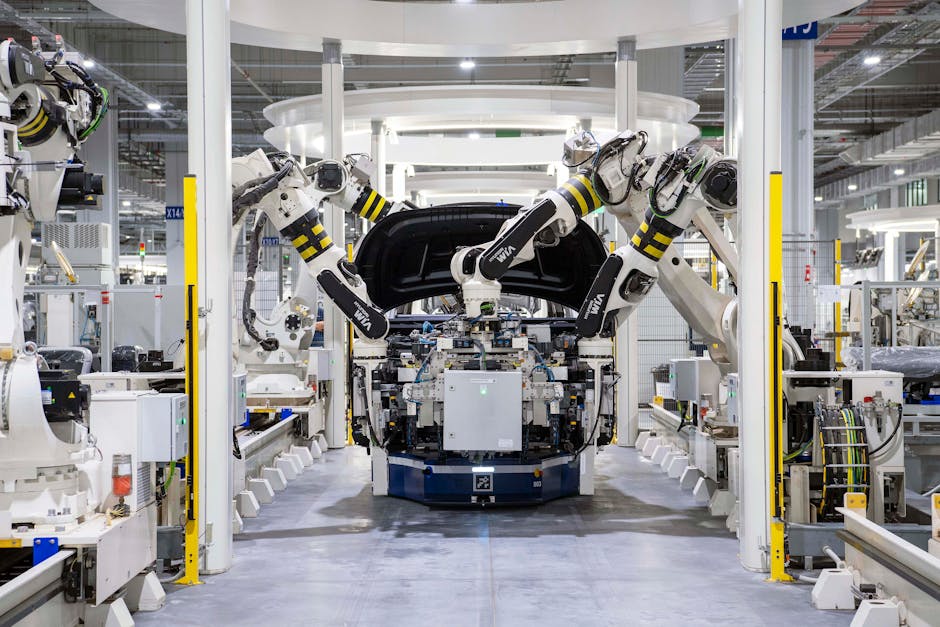
The acceleration of Smart Manufacturing Automation over the next three to five years will be driven by five transformative trends that are already taking shape in facilities operated by industry leaders like Siemens, Rockwell Automation, and GE Digital. These trends represent not incremental improvements but fundamental shifts in how manufacturing execution systems operate, how production scheduling adapts to volatility, and how shop floor control integrates with enterprise-wide intelligence platforms. Understanding these trajectories is critical for anyone managing MES implementations, overseeing SCADA infrastructure, or leading digital transformation initiatives in production environments.
Trend 1: Hyper-Personalized Production Through Adaptive Automation
The era of mass customization is evolving into hyper-personalization, where Smart Manufacturing Automation systems dynamically reconfigure production lines to accommodate batch sizes down to single units without sacrificing efficiency. By 2028, we expect to see widespread deployment of modular manufacturing cells that can be reprogrammed on-the-fly through Industrial Automation Systems that interpret demand signals directly from ERP platforms and customer order databases. Companies like Bosch have already demonstrated prototype facilities where CNC machines, collaborative robots, and material handling systems reconfigure themselves based on incoming work orders, eliminating traditional changeover time almost entirely.
This shift will fundamentally alter capacity planning methodologies. Traditional material requirements planning (MRP) cycles that operate on weekly or daily intervals will give way to continuous, real-time adjustments powered by Manufacturing Intelligence Platforms that incorporate demand forecasting algorithms with accuracy rates exceeding 95%. The implications for inventory management are profound: just-in-time manufacturing will evolve into just-in-moment production, where raw materials arrive at precisely the instant they're needed for a specific customer order. For production planners, this means shifting from schedule optimization to constraint management, where the system handles tactical decisions while humans focus on strategic capacity allocation and supplier relationship management.
The Role of Digital Twins in Personalized Manufacturing
Digital twin technology will be the enabler that makes hyper-personalization economically viable. By 2029, we anticipate that most mid-to-large manufacturers will maintain comprehensive digital replicas of their entire production infrastructure, allowing them to simulate the impact of custom orders before committing physical resources. These twins will integrate data from IIoT sensors across the shop floor, creating virtual environments where machine learning models can test thousands of production scenarios in seconds. When a custom order arrives, the digital twin identifies the optimal production path, reserves equipment capacity, and pre-stages materials—all before the first machine is activated.
Trend 2: Autonomous Quality Control With Zero-Touch Inspection
Quality management systems in 2026 still rely heavily on sampling methodologies and manual inspection checkpoints, creating inherent trade-offs between inspection coverage and production throughput. Within the next three years, Smart Manufacturing Automation will eliminate this compromise through autonomous, continuous quality verification that inspects 100% of output without slowing production lines. Advanced vision systems, acoustic sensors, and spectroscopic analyzers will work in concert to detect defects measured in microns while products move at full production speed.
Honeywell and other automation leaders are pioneering systems that apply custom AI development to quality datasets, enabling machines to learn the difference between acceptable variation and actual defects with precision that surpasses human inspectors. These systems will incorporate Six Sigma quality control principles directly into real-time monitoring, automatically adjusting process parameters when statistical trends indicate drift toward specification limits. By 2030, we project that quality escapes—defects that reach customers—will decline by 90% in facilities that have fully implemented autonomous inspection integrated with process automation controls.
Predictive Quality Management
Beyond detecting existing defects, next-generation quality systems will predict quality outcomes before production begins. By analyzing historical correlations between input material characteristics, environmental conditions, machine performance parameters, and final product quality, these systems will recommend process adjustments that prevent defects from occurring. For example, if incoming raw material shows slight composition variations that historically correlate with surface finish issues, the system will preemptively adjust temperature, pressure, or cycle time parameters to compensate. This predictive approach transforms quality management from reactive inspection to proactive prevention.
Trend 3: Edge Intelligence Replacing Centralized Cloud Processing
The current generation of Industrial Automation Systems relies heavily on cloud-based analytics platforms that aggregate data from IIoT Integration points across facilities. While this architecture provides powerful analytical capabilities, it introduces latency that becomes problematic for time-sensitive decisions and creates vulnerabilities when network connectivity fluctuates. The next evolution of Smart Manufacturing Automation will push intelligence to the edge, embedding sophisticated decision-making capabilities directly into production equipment and local controllers.
By 2028, we expect to see edge computing nodes deployed throughout manufacturing facilities, each capable of running complex machine learning models that previously required cloud infrastructure. These edge nodes will process sensor data from nearby equipment, making split-second adjustments to optimize OEE without waiting for round-trip communication with centralized systems. A CNC machine experiencing tool wear will autonomously adjust feed rates and spindle speeds based on real-time vibration analysis and acoustic signatures, maintaining tight tolerances without human intervention or cloud consultation.
This distributed intelligence architecture doesn't eliminate cloud platforms but redefines their role. Centralized systems will focus on strategic analytics, cross-facility optimization, and long-term trend analysis, while edge intelligence handles tactical, real-time control. The division of labor improves both responsiveness and resilience: production continues even when network connectivity is compromised, while cloud platforms still gain access to comprehensive datasets for enterprise-wide insights. For SCADA implementations, this means architecting hierarchical intelligence layers where each level operates semi-autonomously while contributing to overall system optimization.
Trend 4: Sustainable Manufacturing Through Intelligent Resource Optimization
Regulatory pressures, customer expectations, and operational cost considerations are converging to make sustainability a central objective rather than a peripheral concern. Smart Manufacturing Automation systems deployed between 2026 and 2030 will incorporate energy efficiency and waste reduction as primary optimization targets alongside traditional metrics like throughput and quality. Manufacturing Intelligence Platforms will continuously balance production goals against resource consumption, identifying opportunities to reduce energy usage, minimize material waste, and lower carbon emissions without compromising output targets.
Leading implementations will feature real-time energy management systems that shift production schedules to take advantage of renewable energy availability and dynamic electricity pricing. When solar or wind generation peaks, energy-intensive processes automatically accelerate; when grid power becomes expensive or carbon-intensive, non-critical operations defer to off-peak hours. Similarly, process automation systems will optimize material utilization by identifying cutting patterns, forming sequences, and production batches that minimize scrap generation. Early adopters implementing these approaches are already achieving 20-30% reductions in energy consumption and 15-25% decreases in material waste.
Circular Manufacturing Integration
Beyond optimizing virgin resource consumption, Smart Manufacturing Automation will increasingly incorporate circular economy principles, where waste streams from one process become inputs for another. Intelligent systems will track material composition throughout production, identifying opportunities to reclaim, reprocess, and reintroduce materials that would traditionally be discarded. Product data management (PDM) systems will maintain complete material genealogies, enabling end-of-life products to be efficiently disassembled and their components returned to appropriate production streams. This closed-loop approach will be particularly transformative in industries like electronics, automotive, and packaging, where material recovery economics are becoming increasingly favorable.
Trend 5: Human-Machine Collaboration Through Augmented Operators
Despite advances in automation, human expertise remains irreplaceable for complex problem-solving, process improvement, and handling exceptional situations. The next generation of Smart Manufacturing Automation will enhance rather than replace human capabilities, creating augmented operator environments where workers access real-time intelligence, contextual guidance, and predictive insights through wearable devices, heads-up displays, and adaptive interfaces. By 2029, we anticipate that most production facilities will equip skilled workers with augmented reality systems that overlay machine status, quality metrics, and maintenance recommendations directly onto their field of view as they move through the facility.
These augmented environments will transform how we approach change management and lean manufacturing implementation. New employees will receive contextual training as they perform actual work, with the system providing step-by-step guidance, highlighting relevant controls, and warning about potential safety hazards. Experienced operators will benefit from predictive maintenance alerts that appear precisely when and where intervention is needed, along with diagnostic information that accelerates troubleshooting. The result is a workforce that operates with superhuman awareness, combining human judgment with machine intelligence to achieve performance levels impossible for either alone.
For talent development in an industry facing significant skill shortages, this human-machine collaboration model offers a compelling solution. Rather than requiring years of experience before workers can operate complex equipment effectively, augmented systems compress learning curves from months to weeks. Simultaneously, they capture the expertise of retiring workers by documenting their decision-making processes and embedding that knowledge into the guidance systems that assist their replacements. This knowledge preservation capability will be critical for manufacturers facing the demographic challenges of the late 2020s.
Implementation Considerations and Strategic Roadmapping
While these trends offer compelling visions of manufacturing's future, realizing their benefits requires thoughtful implementation strategies that acknowledge the realities of existing infrastructure, workforce capabilities, and capital constraints. Few manufacturers can afford to completely replace functional systems with cutting-edge technology simultaneously across all five trend areas. Instead, successful digital transformations will follow deliberate roadmaps that sequence investments to deliver incremental value while building toward comprehensive Smart Manufacturing Automation capabilities.
We recommend prioritizing initiatives based on three criteria: potential impact on key performance indicators, alignment with existing technical infrastructure, and availability of internal expertise or external partners. For manufacturers with mature IIoT Integration and robust SCADA systems, edge intelligence implementations may offer the fastest path to measurable improvements in OEE and quality metrics. Organizations facing severe sustainability pressures or operating in regions with volatile energy costs should prioritize intelligent resource optimization. Those struggling with skilled labor shortages may find augmented operator systems deliver the highest return by making existing workers more productive while accelerating new hire onboarding.
Conclusion
The trajectory of Smart Manufacturing Automation through 2030 points toward production environments that are simultaneously more capable, more efficient, and more adaptable than today's most advanced facilities. The convergence of edge intelligence, autonomous quality systems, hyper-personalized production, sustainable resource optimization, and human-machine collaboration will create manufacturing operations that respond to market demands with unprecedented agility while maintaining the consistency and quality that customers demand. For production leaders, supply chain executives, and manufacturing engineers, understanding these trends isn't merely about technology awareness—it's about positioning their organizations to compete in an environment where operational excellence will be defined by how effectively they integrate intelligent automation throughout their value chains. As we navigate this transformation, partnering with proven AI Manufacturing Solutions providers will be essential to accelerating adoption while managing the complexities of enterprise-scale implementations.


Comments
Post a Comment