Best Practices for Deploying AI Agents for Smart Manufacturing
Practitioners who have navigated the initial phases of smart manufacturing transformation understand that deploying AI agents into production environments involves far more than technical integration—it requires a sophisticated orchestration of data pipelines, model governance, operational protocols, and change management. As manufacturing operations become increasingly dependent on autonomous decision-making systems, the practices that separate successful deployments from underperforming initiatives become critically important. The difference often lies not in the sophistication of the underlying algorithms, but in how thoroughly organizations address the operational, cultural, and architectural foundations that enable AI agents to deliver sustained value at scale.
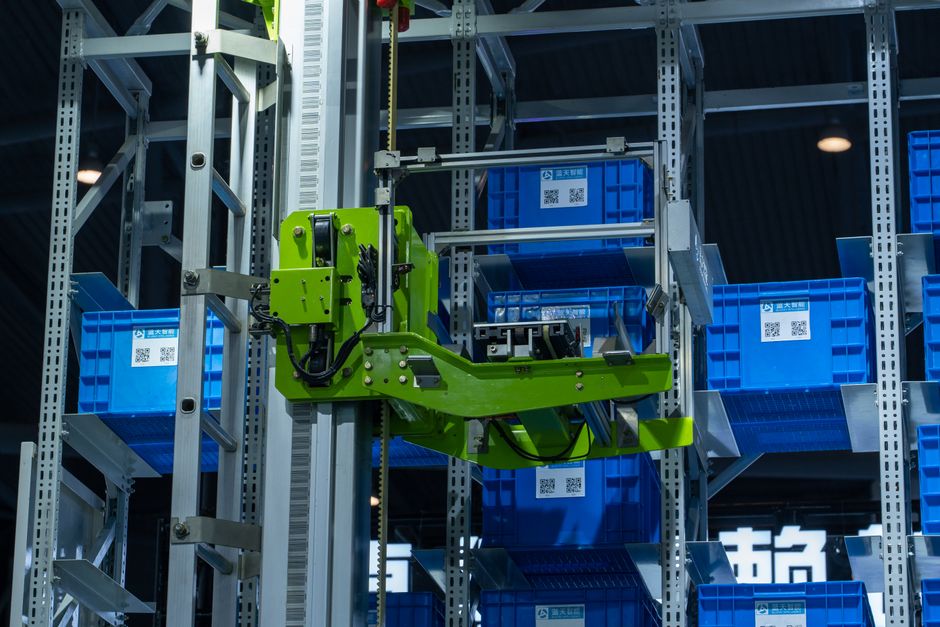
Drawing on lessons from leading implementations across sectors—from Siemens' digitalized factories to GE's Predix-powered plants—this guide distills proven practices for maximizing the impact of AI Agents for Smart Manufacturing. These practices span the full lifecycle of AI agent systems, from architecture design and data engineering through deployment, monitoring, and continuous improvement. For organizations that have moved beyond pilot projects and are scaling AI agents across multiple lines or facilities, adhering to these principles becomes essential to maintaining performance, ensuring safety, and realizing the strategic benefits of Autonomous Manufacturing Operations.
Establishing a Robust Foundation for AI Agent Deployment
Experienced practitioners recognize that the architecture underpinning AI agents must balance several competing demands: real-time responsiveness, scalability across diverse manufacturing environments, integration with legacy systems, and resilience to network disruptions or component failures. A common pitfall is designing systems that perform well in controlled pilot conditions but struggle when deployed across facilities with varying equipment vintages, network infrastructures, and operational practices. Robust architecture begins with edge-cloud hybrid designs that distribute intelligence strategically—placing latency-sensitive decision-making at the edge near equipment while centralizing computationally intensive model training and cross-facility analytics in cloud or data center environments.
Edge deployment is particularly critical for applications where millisecond-level response times matter, such as real-time quality control on high-speed production lines or dynamic adjustment of process parameters in continuous manufacturing processes. Edge devices equipped with AI inference capabilities can execute model predictions locally, eliminating network latency and ensuring operation continuity even during connectivity disruptions. However, these edge components must synchronize with centralized systems for model updates, performance monitoring, and aggregation of insights across the manufacturing network—requiring thoughtful design of data flows, update mechanisms, and fallback protocols.
Designing for Interoperability and Legacy Integration
Most manufacturing environments feature a heterogeneous technology landscape accumulated over decades, including PLCs from multiple vendors, SCADA systems with proprietary protocols, and MES platforms with varying degrees of openness. AI agents must interoperate seamlessly with this ecosystem, which demands adopting industry standards like OPC UA for equipment connectivity, ISA-95 for MES integration, and RESTful APIs for enterprise system interactions. Practitioners should prioritize middleware architectures that abstract underlying system complexity, providing AI agents with consistent interfaces regardless of the specific equipment or software they interact with.
Legacy integration often requires developing custom adapters or protocol translators, particularly for older equipment that lacks native digital connectivity. While this represents upfront investment, it is essential for ensuring that AI agents have comprehensive visibility and control across all production assets. The alternative—limiting agents to only modern, connected equipment—creates blind spots that undermine the holistic optimization and end-to-end orchestration that justify AI agent investments in the first place.
Integration Best Practices for Manufacturing Execution Systems
The manufacturing execution system serves as the operational nerve center where production schedules, work orders, quality records, and material transactions converge. Integrating AI agents with MES platforms enables them to influence core manufacturing processes directly, but it also introduces risks if not managed carefully. Best practice dictates establishing clear boundaries around agent authority—defining which decisions agents can make autonomously, which require human approval, and which remain exclusively under human control. These boundaries should reflect risk assessment that considers safety implications, financial exposure, regulatory requirements, and operational criticality.
For instance, an AI agent might have full autonomy to adjust machine speeds within predefined safe operating ranges to optimize throughput, require supervisor approval before rescheduling production to accommodate a rush order, and be prohibited entirely from modifying quality specifications or safety interlocks. Implementing these boundaries requires both technical controls—such as role-based access controls and approval workflows within the MES—and organizational protocols that define escalation paths, notification requirements, and audit logging. Many organizations partner with specialists in developing AI systems to ensure that these governance mechanisms are built into the agent architecture from the beginning rather than retrofitted after deployment.
Ensuring Data Quality and Model Reliability
AI agents are only as good as the data they consume and the models they employ. In production environments, data quality issues—sensor drift, communication errors, missing values, or mislabeled records—can degrade model performance and lead to suboptimal or incorrect decisions. Practitioners should implement continuous data quality monitoring that flags anomalies in real time, triggering alerts when data patterns deviate from expected norms. This might include statistical process control charts on sensor readings, validation checks that ensure consistency across related data points, and comparison of real-time data against historical ranges to detect outliers.
Model reliability demands rigorous testing and validation before deployment, followed by ongoing performance monitoring in production. Testing should include not only accuracy metrics on held-out datasets but also robustness checks that evaluate model behavior under edge cases, adversarial inputs, and distribution shifts that reflect real-world variability. Once deployed, models should be monitored for concept drift—the gradual degradation in performance as the statistical properties of input data change over time due to equipment wear, process modifications, or shifts in material suppliers. Detecting drift early enables timely model retraining, preventing the gradual erosion of agent effectiveness that can go unnoticed until significant value is lost.
Optimizing AI Agent Performance in Production Environments
After initial deployment, optimizing AI agent performance becomes an ongoing discipline that combines technical tuning, operational feedback, and strategic alignment. Experienced practitioners establish closed-loop feedback systems where agent decisions, actions, and outcomes are logged comprehensively, analyzed systematically, and used to refine both model parameters and operational protocols. This creates a virtuous cycle where each production run contributes data that improves future agent performance, steadily enhancing the value delivered over time.
Performance optimization often reveals opportunities to expand agent scope or autonomy as confidence grows. For example, an agent initially configured to recommend maintenance schedules might evolve to directly generate work orders and reserve technician time once its predictions consistently align with expert judgment. Similarly, agents managing production schedules might progressively incorporate more variables—initially optimizing for throughput alone, then adding considerations for energy costs, tooling life, and downstream capacity constraints as the system matures. This evolutionary approach allows organizations to extract increasing value from AI investments while managing risk prudently.
Leveraging Digital Twin Intelligence
Digital twin technology amplifies AI agent capabilities by providing high-fidelity virtual representations of physical assets and processes. When AI agents operate on digital twins, they can simulate proposed actions before executing them in the real world, validating that interventions will produce desired outcomes without introducing unintended consequences. For instance, before adjusting temperatures across multiple zones in a heat treatment furnace, an agent can run the proposed changes through the digital twin to confirm that all zones will remain within specification and that downstream properties will meet quality targets.
Digital Twin Intelligence also enables scenario planning and what-if analysis that inform strategic decisions. Manufacturing leaders can task AI agents with exploring how different production strategies, equipment configurations, or supply chain arrangements would perform under various demand forecasts, cost structures, or disruption scenarios. The insights generated guide capital investments, contract negotiations, and operational policies—extending the value of AI agents beyond day-to-day execution to strategic planning and business development.
Advanced Strategies for Autonomous Operations
As organizations mature in their AI agent deployments, attention shifts to advanced strategies that unlock higher levels of autonomy and business value. One such strategy involves multi-agent coordination, where specialized agents responsible for different aspects of manufacturing—such as scheduling, quality, maintenance, and logistics—collaborate to achieve system-wide optimization. Multi-agent systems require sophisticated orchestration mechanisms that manage interactions, resolve conflicts when agents have competing objectives, and ensure that local optimizations do not create global inefficiencies.
For example, a scheduling agent seeking to maximize throughput might propose a production sequence that a maintenance agent recognizes would accelerate wear on critical equipment. A logistics agent might flag that the sequence would create warehouse congestion, while a quality agent identifies increased risk of defects based on rapid material changeovers. Orchestrating these agents to reach a balanced decision requires negotiation protocols, shared objective functions that encode business priorities, and transparency mechanisms that allow human supervisors to understand how decisions were reached and intervene when necessary. Companies like Rockwell Automation and ABB have pioneered frameworks for multi-agent coordination in industrial settings, demonstrating that properly designed systems can achieve performance levels unattainable through isolated, single-purpose agents.
Integrating Human Expertise and Agent Autonomy
The most effective implementations of AI Agents for Smart Manufacturing do not replace human expertise—they augment it, combining the pattern recognition and optimization capabilities of AI with the contextual judgment, creativity, and ethical reasoning of experienced manufacturing professionals. Best practice involves designing human-agent interfaces that present agent reasoning transparently, provide intuitive override mechanisms, and solicit human input on decisions that involve ambiguity, high stakes, or novel situations outside the agent's training distribution.
This collaborative paradigm, sometimes called human-in-the-loop or human-on-the-loop operation, ensures that agents benefit from human oversight without requiring constant intervention that would negate autonomy benefits. Operators and supervisors focus on exception handling, strategic guidance, and continuous improvement rather than routine decision-making, which agents handle reliably. Over time, this partnership elevates the role of manufacturing personnel from task execution to system oversight and strategic optimization, requiring investments in training and role evolution but ultimately creating more engaging, higher-value work.
Conclusion
Deploying AI Agents for Smart Manufacturing at scale demands rigorous attention to architecture, integration, governance, and continuous improvement practices that extend well beyond initial pilot successes. Experienced practitioners who build robust edge-cloud infrastructures, establish clear agent authority boundaries, maintain data quality and model reliability, and foster effective human-agent collaboration position their organizations to realize the full strategic potential of autonomous operations. As these systems mature, advanced capabilities such as multi-agent coordination and Digital Twin Intelligence further amplify value, enabling manufacturers to navigate complexity, respond to disruptions, and optimize across dimensions that were previously impossible to manage simultaneously. The integration of sophisticated techniques like Context Engineering for AI ensures that agents operate with the deep situational awareness required for truly autonomous decision-making, transforming smart manufacturing from an aspiration into a competitive reality that drives resilience, efficiency, and innovation across the industrial landscape.


Comments
Post a Comment