AI Visual Inspection Systems: 7 Critical Mistakes Manufacturers Must Avoid
In today's manufacturing landscape, where OEE targets continue to rise and quality tolerances shrink, visual inspection has become a critical bottleneck. Traditional manual inspection methods struggle to keep pace with production volumes while maintaining the consistency required for modern Quality Management Systems. This reality has driven rapid adoption of AI-powered visual inspection across automotive, electronics, pharmaceutical, and discrete manufacturing sectors. Yet despite significant investments in computer vision technology, many manufacturers find themselves disappointed with deployment outcomes, struggling to achieve the ROI projections that justified their capital expenditure.
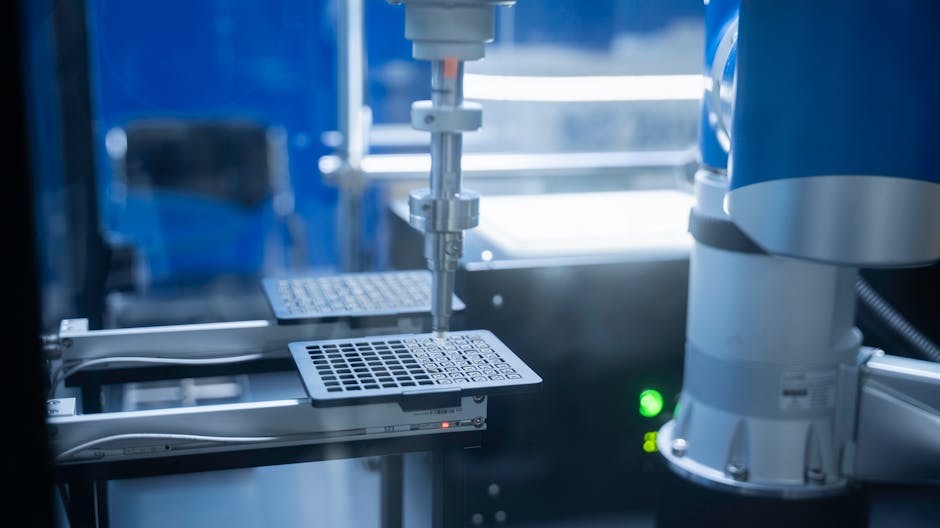
The gap between expectation and reality rarely stems from the technology itself. Instead, implementation failures trace back to avoidable strategic and tactical errors during the planning, deployment, and integration phases. AI Visual Inspection Systems deliver transformative results when deployed correctly, but the path from pilot to production-scale deployment is littered with expensive missteps. Manufacturing leaders at companies like Siemens and Rockwell Automation have documented these patterns extensively, creating a roadmap of pitfalls to avoid. Understanding these common mistakes before launching your inspection automation initiative can mean the difference between a system that delivers consistent defect detection rates above 99.5% and one that languishes as a costly proof-of-concept that never reaches production.
Mistake #1: Starting Without Clear Quality Metrics and Acceptance Criteria
The most fundamental error manufacturers make when implementing AI Visual Inspection Systems occurs before any equipment is purchased or algorithms are trained. Too many organizations rush into technology selection without establishing precise, measurable definitions of what constitutes a defect, how inspection performance will be quantified, and what minimum accuracy thresholds the system must achieve before production deployment. This lack of specificity creates confusion during model training, makes it impossible to conduct meaningful vendor comparisons, and ultimately leaves teams without objective criteria for determining when the system is ready for Manufacturing Execution Systems integration.
In practice, this mistake manifests when teams use vague requirements like "identify surface defects" rather than specifying exact defect categories with dimensional tolerances, acceptable false positive rates, and minimum detection thresholds. A robust specification might instead state: "Detect scratches ≥0.5mm length with 99.2% true positive rate and ≤1% false positive rate under production line speeds of 120 units/minute with ambient lighting variation between 450-650 lux." This precision enables meaningful CAPA procedures when issues arise and provides the quantitative foundation required for Six Sigma process improvement initiatives.
Avoiding this mistake requires collaboration between Quality Management Systems personnel, production engineers, and data science teams before any pilot begins. Document your current manual inspection escape rates, typical defect distributions from your quality database, and the business impact of false positives versus false negatives. Establish these metrics as contractual requirements with solution vendors and build them into your acceptance testing protocols. Only with this foundation can you objectively measure whether your AI Visual Inspection Systems implementation delivers genuine improvement over baseline performance.
Mistake #2: Underestimating Data Collection and Labeling Requirements
Manufacturing teams consistently underestimate the volume, quality, and diversity of training data required to build production-grade inspection models. Engineers accustomed to rule-based machine vision systems often assume that a few dozen examples per defect category will suffice, failing to recognize that deep learning models require hundreds or thousands of labeled examples to achieve robust performance across normal production variation. This miscalculation leads to underpowered training datasets that produce models unable to generalize beyond the narrow conditions represented in the initial sample set.
The data labeling challenge compounds this issue. Creating high-quality labeled datasets requires significant domain expertise and time investment from your most experienced quality inspectors—the same personnel already stretched thin managing daily inspection workloads and supporting root cause analysis activities. Many organizations fail to budget adequately for this effort, resulting in rushed labeling sessions with inconsistent criteria or delegating the task to junior personnel who lack the expertise to make nuanced defect classifications. The resulting label noise propagates directly into model performance, creating systems that replicate human inconsistency rather than eliminating it.
Smart manufacturers address this challenge by treating data collection as a formal project workstream with dedicated resources and realistic timelines. Plan for 3-6 months of systematic data gathering that captures production variation across shifts, material lots, environmental conditions, and equipment states. Invest in custom AI development platforms that streamline the labeling workflow and implement quality controls including inter-rater reliability checks among your labeling team. Consider synthetic data generation techniques to augment real production samples, particularly for rare defect categories that occur infrequently but carry high business impact. This upfront investment in data infrastructure pays dividends throughout the system's operational life.
Mistake #3: Ignoring Production Environment Realities During Development
Laboratory testing and production deployment represent fundamentally different operating environments, yet many AI Visual Inspection Systems fail because development teams optimize for the former rather than the latter. Pilot systems tested under controlled lighting, with cleaned components, and at reduced line speeds often demonstrate impressive accuracy metrics that collapse when exposed to actual production conditions: variable ambient light from skylights and overhead doors, contamination from cutting fluids or packaging materials, vibration from adjacent equipment, and the relentless pace of real manufacturing throughput requirements.
This disconnect manifests across multiple dimensions. Imaging hardware selected for laboratory clarity may lack the ruggedness required for industrial environments where temperature swings, humidity, electromagnetic interference from CNC equipment, and physical shock are routine. Network connectivity assumptions that work perfectly on the development bench fail when deployed to plant floor environments where wireless coverage is spotty and wired Ethernet runs compete with legacy SCADA infrastructure. Processing latency that seems acceptable during benchtop testing creates unacceptable cycle time impacts when integrated into production lines designed around takt time optimization.
Successful deployments address these realities from day one by conducting development work in production-representative environments. Install development cameras and lighting in the actual production area, even if initially operated in parallel with existing inspection methods. Stress test algorithms with production-realistic variation by deliberately introducing the contamination, lighting changes, and positioning variability your system will face in daily operation. Validate processing performance at peak line speeds with production-grade computing hardware mounted in industrial enclosures rated for your environment. This discipline ensures your AI Visual Inspection Systems deliver laboratory performance under factory conditions.
Mistake #4: Treating AI Inspection as a Standalone Solution Rather Than an Integrated System
Organizations frequently approach visual inspection automation as an isolated technology deployment rather than recognizing it as one component within a larger manufacturing technology ecosystem. This siloed perspective leads to systems that operate as disconnected islands—generating inspection results that never flow into your Manufacturing Execution Systems, failing to trigger downstream actions in your SCADA infrastructure, and producing data that remains inaccessible to Digital Twin Engineering models or Predictive Maintenance AI analytics that could extract additional value from the inspection stream.
The integration challenge extends beyond technical connectivity to encompass process and organizational dimensions. AI Visual Inspection Systems may generate defect classifications that don't align with existing quality codes in your QMS database, requiring manual translation that eliminates the speed advantage automation was meant to provide. Reject handling protocols designed around human inspection decision-making may not accommodate the confidence scores and uncertainty quantification that AI systems naturally produce. Change management procedures developed for traditional equipment may lack provisions for model retraining, version control, and validation protocols essential for maintaining AI system performance over time.
Forward-thinking manufacturers avoid this mistake by mapping integration requirements before technology selection begins. Document every system your inspection solution must interface with: MES platforms for production tracking, QMS databases for defect trending, SCADA systems for automated sorting and rejection, inventory management systems for material holds, and supplier relationship management platforms for supplier quality feedback loops. Define data exchange protocols, required latency for closed-loop control scenarios, and the organizational processes for managing model updates that will inevitably be needed as product designs evolve or new defect modes emerge. Smart MES Solutions that provide pre-built connectors for common inspection platforms can dramatically reduce integration complexity and time-to-value.
Mistake #5: Neglecting the Human Factors and Change Management Dimensions
Even technically flawless AI Visual Inspection Systems fail when manufacturers neglect the human elements of deployment. Quality inspectors whose jobs are being automated may resist providing the training data and domain expertise essential for system success if they perceive the technology as a threat rather than a tool that elevates their role. Production supervisors may route the most challenging components away from automated inspection stations, preserving manual methods for difficult cases and ensuring the AI system never develops the capabilities to handle edge cases. Maintenance teams unfamiliar with computer vision technology may lack the diagnostic skills needed to distinguish between optical contamination requiring simple cleaning, lighting degradation requiring bulb replacement, and model drift requiring data science intervention.
These human factors manifest in subtle ways that undermine system performance. Operators may adjust component positioning or orientation to "help" the camera, inadvertently training the model to expect presentation conditions that won't occur during lights-out operation. Quality engineers may override system reject decisions without documenting their rationale, preventing the feedback loop necessary for continuous model improvement. Plant leadership may interpret any false reject as a system failure, creating pressure to tune sensitivity downward until the system catches fewer true defects than the manual inspection it replaced.
Successful deployments invest as much effort in change management as in technology implementation. Clearly communicate how AI inspection will augment rather than replace skilled quality personnel, freeing them from repetitive visual strain to focus on root cause analysis, corrective action development, and continuous improvement initiatives. Provide comprehensive training not just on system operation but on the fundamental principles of machine learning, helping teams understand why models require diverse training data and how performance evolves through feedback loops. Establish clear escalation protocols and decision rights that empower operators to flag uncertain cases while maintaining production flow. Create cross-functional teams that bring together quality, production, maintenance, and data science expertise to manage the system as an integrated asset rather than an IT project.
Mistake #6: Failing to Plan for Ongoing Model Maintenance and Continuous Improvement
Perhaps the most insidious mistake manufacturers make is treating AI Visual Inspection Systems as "set and forget" solutions that will maintain initial performance indefinitely without ongoing attention. This static mindset ignores the reality that manufacturing environments constantly evolve: material suppliers change, process parameters drift, equipment wears, product designs update, and new defect modes emerge. Models trained on historical data gradually lose accuracy as the production reality diverges from training conditions—a phenomenon known as model drift that can erode inspection performance from 99% accuracy to below manual inspection levels over 12-18 months without intervention.
Organizations discover this mistake too late when they notice rising customer complaints despite AI inspection results showing acceptable quality levels, or when they observe increasing operator overrides of system decisions. Investigation reveals the system is flagging defects that no longer occur while missing new defect modes that weren't present in training data, or struggling with component variations from a new supplier whose material characteristics differ subtly from the original source. Without systematic monitoring for model drift and established procedures for data collection, retraining, and validation, these performance degradations accelerate until the system loses credibility.
Avoiding this trap requires building continuous improvement into your operating model from day one. Implement statistical process control methods that monitor not just defect rates but model confidence distributions, inference latencies, and the frequency of edge cases requiring human review. Establish data collection protocols that systematically capture examples of missed defects, false positives, and new product variants, maintaining an evergreen training dataset that grows with your production experience. Budget for quarterly model refresh cycles that incorporate this new data, and develop streamlined validation protocols that verify performance without requiring full requalification for minor updates. Leading manufacturers treat their AI Visual Inspection Systems as living assets that grow more capable over time rather than depreciating technologies that deliver diminishing returns.
Mistake #7: Selecting Solutions Based on Demos Rather Than Production Validation
The final critical mistake stems from procurement approaches better suited to traditional equipment purchases than AI systems. Vendor demonstrations conducted with carefully curated test samples under optimal conditions provide virtually no predictive value for production performance, yet many manufacturers base selection decisions primarily on these showcase presentations. The vendor who delivers the most impressive demo may be showing results from a model trained specifically on your sample parts, using imaging conditions optimized for those exact components, with no evidence the system will generalize to production variation or maintain performance as products evolve.
This mistake compounds when evaluation criteria focus on features and specifications rather than demonstrated outcomes. Vendors compete on camera resolution, processing speed, and algorithm sophistication—technical characteristics that sound impressive but don't directly correlate with the business outcomes that matter: consistent defect detection at production speeds, low false positive rates that maintain throughput, and robust performance across the natural variation in your manufacturing process. Without production-realistic validation, manufacturers often select solutions optimized for marketing impact rather than manufacturing results.
Sophisticated buyers insist on proof-of-concept deployments using production parts, production environments, and production-realistic timelines before making purchase decisions. Provide vendors with representative samples that include the full range of acceptable variation plus all critical defect categories at realistic occurrence rates. Require testing at actual line speeds with production lighting and positioning variation. Evaluate not just accuracy metrics but the vendor's process for data collection, labeling workflow, training methodology, and model update procedures—these process capabilities will determine long-term success far more than any snapshot performance metric. Consider piloting multiple solutions in parallel on the same production line to generate direct performance comparisons under identical conditions.
Conclusion: Building Inspection Systems That Deliver Lasting Value
AI Visual Inspection Systems represent a transformative opportunity for manufacturers facing mounting pressure to improve quality, increase throughput, and address skilled labor shortages in quality inspection roles. The technology has matured beyond experimental status—companies like Honeywell and ABB now deploy these systems at scale across global manufacturing networks, achieving defect detection capabilities that exceed human performance while generating rich data streams that feed Predictive Maintenance AI algorithms and Digital Twin Engineering models. Yet realizing these benefits requires more than selecting capable technology; it demands rigorous planning, realistic expectations, and operational discipline throughout deployment and beyond.
The seven mistakes outlined above share a common theme: they stem from treating AI inspection as a simple technology swap rather than recognizing it as a sociotechnical system that touches quality management, production operations, maintenance practices, and continuous improvement methodologies. Success requires equal attention to technical excellence and organizational readiness, with clear metrics, robust data foundations, production-realistic testing, enterprise integration, change management, continuous improvement processes, and evidence-based vendor selection all playing essential roles. Manufacturers who address these dimensions holistically achieve inspection systems that don't just match manual performance—they redefine what's possible in quality assurance, creating competitive advantages through capabilities impossible with traditional methods. As manufacturing evolves toward Intelligent Manufacturing Systems that integrate AI across the value chain, visual inspection serves as a critical foundation—one that delivers maximum value when built on sound implementation principles rather than expensive trial and error.


Comments
Post a Comment