AI-Driven Manufacturing: A Complete Guide for Industry Beginners
The manufacturing landscape is undergoing a fundamental transformation as artificial intelligence technologies reshape how products are designed, produced, and delivered. From automotive assembly lines to pharmaceutical production facilities, intelligent systems are now making decisions that once required human expertise, analyzing vast datasets in milliseconds, and optimizing processes that were previously managed through manual oversight. This shift represents more than incremental improvement—it marks the emergence of a new manufacturing paradigm where machines learn, adapt, and continuously improve without explicit programming for every scenario.
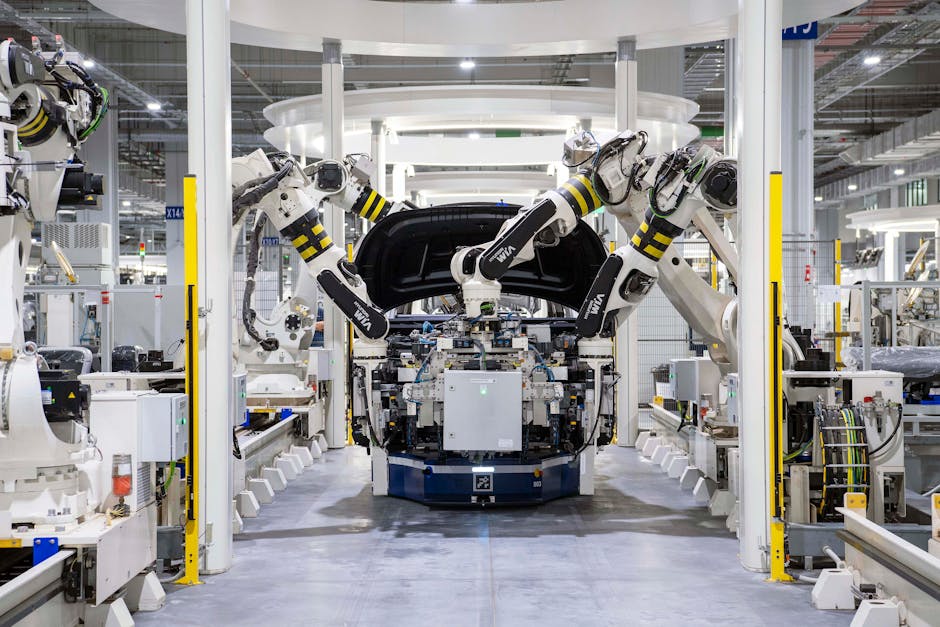
For manufacturers still operating with traditional systems, understanding AI-Driven Manufacturing has become essential to remaining competitive in an increasingly digital marketplace. Companies like Siemens and General Electric have already demonstrated how AI integration can reduce operational costs by 20-30% while simultaneously improving product quality and delivery timelines. This guide provides manufacturing professionals with a comprehensive introduction to AI-driven approaches, covering fundamental concepts, practical applications, and actionable implementation strategies.
What Is AI-Driven Manufacturing and How Does It Differ from Traditional Approaches?
AI-Driven Manufacturing refers to the application of machine learning algorithms, neural networks, and cognitive computing systems to manufacturing operations, enabling facilities to make autonomous decisions based on real-time data analysis. Unlike conventional automation that follows predetermined rules, AI systems can identify patterns, predict outcomes, and optimize processes through continuous learning. This capability fundamentally changes how Manufacturing Execution Systems (MES) operate, transforming them from passive tracking tools into active optimization engines.
The distinction becomes clear when examining Predictive Maintenance applications. Traditional preventive maintenance follows fixed schedules—replacing components every X hours regardless of actual condition. AI-powered Predictive Maintenance AI systems, by contrast, analyze vibration patterns, thermal signatures, and performance metrics to predict failures before they occur. A bearing that would typically be replaced at 5,000 operating hours might safely run for 7,000 hours under optimal conditions, or require early replacement at 3,500 hours if operating under stress. This precision eliminates unnecessary maintenance costs while preventing unexpected downtime.
The Technology Stack Behind Modern AI-Driven Manufacturing
Understanding AI-Driven Manufacturing requires familiarity with several interconnected technologies. At the foundation sits the Industrial Internet of Things (IIoT), which provides the sensor network generating real-time operational data. This data feeds into SCADA systems enhanced with machine learning capabilities, enabling them to move beyond simple monitoring into predictive and prescriptive analytics.
Digital Twin Technology represents another critical component, creating virtual replicas of physical assets, processes, or entire production lines. Engineers at companies like Bosch use these digital twins to test process changes virtually before implementing them on the factory floor, dramatically reducing the risk and cost of experimentation. When combined with AI algorithms, digital twins can simulate thousands of production scenarios in minutes, identifying optimal configurations that would take months to discover through physical testing.
Why AI-Driven Manufacturing Matters: Addressing Real Industry Pain Points
The manufacturing sector faces persistent challenges that traditional approaches struggle to resolve. High operational costs driven by inefficiencies, difficulties scaling production to meet fluctuating demand, quality control inconsistencies, and supply chain disruptions all threaten competitiveness. AI-Driven Manufacturing directly addresses these pain points through intelligent automation and data-driven decision-making.
Consider Overall Equipment Effectiveness (OEE), the gold standard metric for manufacturing productivity. Traditional facilities typically achieve OEE scores of 60-70%, meaning significant value remains lost to downtime, speed losses, and quality defects. Manufacturers implementing AI-driven approaches report OEE improvements of 15-25 percentage points, translating directly to bottom-line impact. Rockwell Automation case studies show that Smart Factory Optimization powered by AI can increase throughput by 20-35% without requiring additional capital equipment.
Quality Control Transformation Through Machine Vision
Quality control represents another area where AI delivers immediate, measurable value. Machine vision systems powered by convolutional neural networks can detect defects invisible to human inspectors, examining 100% of production rather than statistical samples. These systems learn to identify anomalies by analyzing thousands of examples, continuously improving their accuracy. In precision manufacturing environments where a single defective component can trigger costly recalls, this capability proves invaluable.
The integration of AI into Quality Control Automation also generates traceability benefits. Every inspection creates a digital record linked to specific materials, operators, and process parameters, enabling rapid root cause analysis when issues arise. This comprehensive traceability supports both Six Sigma methodologies and regulatory compliance requirements in heavily regulated industries like aerospace and medical devices.
Core Applications: Where AI Creates Immediate Value
While AI-Driven Manufacturing encompasses numerous applications, several areas consistently deliver rapid return on investment. Understanding these core use cases helps manufacturers prioritize their AI initiatives and build momentum through early wins.
Predictive Maintenance and Asset Optimization
Equipment failures disrupt production schedules, create safety hazards, and generate expensive emergency repairs. Predictive maintenance systems monitor equipment condition continuously, using machine learning to distinguish normal operational variation from patterns indicating impending failure. Vibration analysis, thermal imaging, acoustic monitoring, and lubricant analysis all feed AI algorithms that predict remaining useful life with increasing accuracy.
This capability transforms maintenance from a cost center into a strategic advantage. Maintenance teams shift from reactive firefighting to planned interventions scheduled during natural production breaks. Spare parts inventory can be optimized based on predicted failure probabilities rather than maintaining expensive safety stock. The cumulative effect often reduces maintenance costs by 25-40% while improving equipment availability.
Production Optimization and Process Control
Manufacturing processes involve countless variables—temperature, pressure, feed rates, tool wear, material properties—all interacting in complex ways. Human operators develop intuition about optimal settings through experience, but struggle to account for all variables simultaneously. AI systems excel at this multidimensional optimization, continuously adjusting process parameters to maintain optimal conditions as inputs change.
Organizations exploring AI solution development for process optimization typically start with their most challenging or highest-value processes. An injection molding operation might use AI to optimize cycle times while maintaining part quality across different material batches. A chemical process might use AI to maximize yield while minimizing energy consumption and waste generation. These applications directly impact key performance indicators, making value easy to quantify.
Supply Chain Resilience and Demand Forecasting
Supply chain disruptions have moved from occasional annoyances to strategic threats, making Supply Chain Resilience a top priority. AI-Driven Manufacturing extends beyond the factory floor into supply chain management, analyzing market signals, supplier performance, logistics data, and production capacity to optimize Material Requirements Planning (MRP). These systems can automatically adjust production schedules when suppliers signal delays, rebalance inventory across facilities, and identify alternative sourcing options before disruptions impact delivery commitments.
Demand forecasting powered by AI considers far more variables than traditional statistical methods. Seasonal patterns, economic indicators, social media sentiment, weather forecasts, and competitive activities all inform more accurate predictions. This accuracy enables more confident Just-In-Time production, reducing working capital tied up in inventory while improving delivery performance.
Getting Started: A Practical Implementation Roadmap
Transitioning to AI-Driven Manufacturing requires careful planning and phased implementation. Organizations that succeed typically follow a structured approach beginning with assessment and pilot projects before scaling across the enterprise.
Phase 1: Assessment and Foundation Building
Begin by evaluating current digital infrastructure and data availability. AI systems require substantial data to train effectively, making data collection infrastructure the critical first step. Many manufacturers discover that their existing SCADA systems, MES platforms, and Product Lifecycle Management (PLM) tools collect valuable data but store it in siloed systems that don't communicate effectively.
Establishing a unified data platform that aggregates information from multiple sources creates the foundation for AI applications. This often involves implementing industrial data historians, edge computing devices that process data near collection points, and secure cloud storage for centralized analytics. While this infrastructure investment requires capital, it enables all subsequent AI initiatives.
Phase 2: Pilot Projects and Proof of Value
Rather than attempting enterprise-wide transformation immediately, successful manufacturers identify specific use cases where AI can demonstrate clear value quickly. Ideal pilot projects share several characteristics: well-defined success metrics, sufficient historical data for model training, manageable scope, and strong operational support from floor personnel who understand the process intimately.
A predictive maintenance pilot focused on a single production line or critical equipment class represents a common starting point. The project team collects sensor data, works with data scientists to develop predictive models, and validates predictions against actual failures. Success builds organizational confidence and provides lessons that inform subsequent deployments.
Phase 3: Scaling and Integration
After validating AI's value through pilots, attention shifts to scaling successful applications across additional equipment, processes, or facilities. This phase often reveals integration challenges as AI systems must work within existing workflows, connect to legacy equipment, and accommodate variations across different production environments.
Change management becomes critical during scaling. Operators, maintenance technicians, and engineers must understand how AI systems support their work rather than replacing their expertise. Training programs that explain AI recommendations help build trust and adoption. Some manufacturers establish centers of excellence that support AI deployments across business units, ensuring consistent approaches while sharing lessons learned.
Overcoming Common Implementation Challenges
While AI-Driven Manufacturing offers substantial benefits, implementation challenges exist. Understanding these obstacles and planning mitigation strategies increases success probability.
Legacy System Integration
Most manufacturers operate a mix of modern and legacy equipment, with some machines lacking digital connectivity entirely. Retrofitting older equipment with sensors and communication capabilities adds cost and complexity. Modern industrial IoT platforms now offer economical retrofitting options, but each installation requires careful planning to avoid disrupting production.
Organizations like Honeywell have developed edge computing solutions specifically designed to bridge legacy equipment and modern analytics platforms. These devices translate older communication protocols, provide local processing power, and ensure cybersecurity without requiring wholesale equipment replacement.
Skills Gaps and Organizational Readiness
AI-Driven Manufacturing requires new skill combinations—data science expertise combined with deep manufacturing knowledge. Few individuals possess both, making team-based approaches necessary. Manufacturers address this gap through partnerships with technology vendors, hiring data science talent, and cross-training existing engineers in analytics techniques.
Building internal capability takes time, but creates sustainable competitive advantage. Some manufacturers establish formal partnerships with universities, creating pipelines for emerging talent while contributing to curriculum development that ensures graduates possess relevant skills.
Conclusion: Embracing the Future of Manufacturing
AI-Driven Manufacturing represents not a distant future but a present reality reshaping competitive dynamics across the manufacturing sector. Companies that master these technologies gain significant advantages in cost, quality, flexibility, and innovation speed. For beginners navigating this transformation, success comes through understanding core concepts, starting with focused pilot projects that demonstrate value, and building organizational capability systematically.
The journey requires investment—in technology infrastructure, skill development, and process redesign—but the alternative of maintaining status quo carries greater risk as competitors advance. Manufacturers seeking to accelerate their AI journey should explore proven Intelligent Automation Solutions that provide frameworks and tools specifically designed for industrial environments. The transformation to AI-driven operations is no longer optional for manufacturers committed to long-term competitiveness—it's the foundation of modern manufacturing excellence.


Comments
Post a Comment