Advanced Strategies for Intelligent Automation in Production Excellence
For automotive manufacturing operations that have moved beyond initial intelligent automation pilots into scaled deployment, the next frontier involves optimizing system performance, expanding application scope, and extracting maximum value from the data infrastructure and analytical capabilities already in place. While early implementations often focus on proving feasibility and building organizational confidence, mature programs must deliver measurable competitive advantages through reduced total cost of ownership, accelerated new product introduction cycles, and quality levels that consistently exceed customer expectations while meeting increasingly stringent regulatory requirements. Organizations including General Motors, Honda, and Toyota have demonstrated that sustained excellence with intelligent automation requires deliberate attention to model governance, cross-functional integration, and continuous refinement of the feedback loops connecting production outcomes back to system parameters.
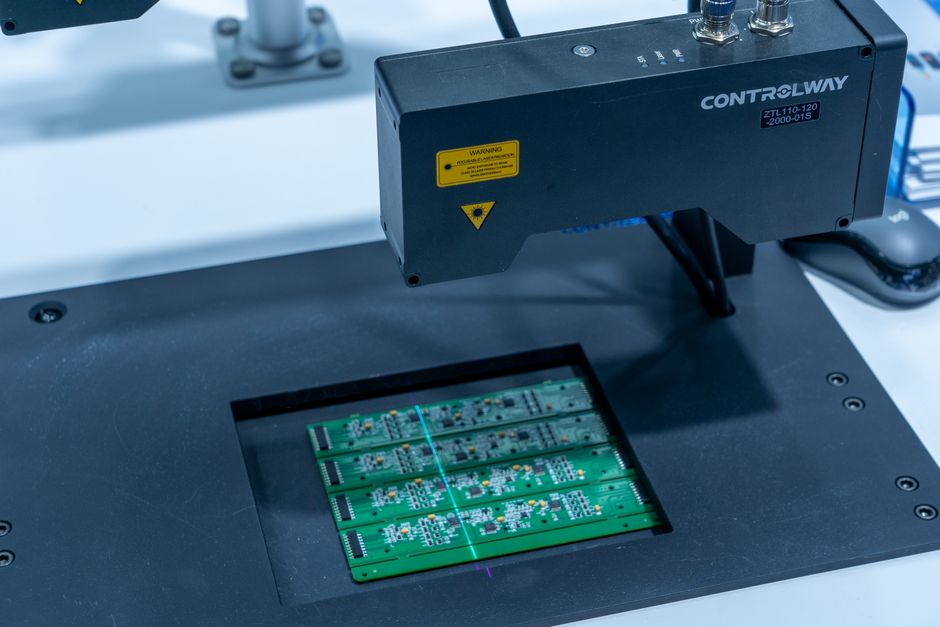
The distinction between adequate and exceptional Intelligent Automation in Production implementations often lies not in the sophistication of algorithms deployed but rather in the operational disciplines surrounding their application. Practitioners who have managed intelligent systems through multiple product launches, supply chain disruptions, and equipment modernization cycles recognize that sustainable performance depends on establishing robust processes for model validation, systematic approaches to identifying high-impact application opportunities, and governance frameworks that balance innovation velocity with risk management appropriate to safety-critical manufacturing environments. These operational maturity factors determine whether intelligent automation delivers transformative value or becomes yet another technology layer requiring maintenance resources without corresponding returns.
Advanced Model Governance and Performance Management
Production environments differ fundamentally from the controlled conditions where machine learning models typically undergo initial training and validation. Equipment wear changes sensor characteristics gradually over time. Supplier transitions introduce subtle material property variations. Process improvements shift the distribution of parameters the model learned to recognize. Without systematic monitoring and adaptation, model accuracy degrades silently until operators lose confidence and revert to manual decision-making, effectively abandoning the automation investment. Establishing formal model governance prevents this drift by implementing continuous validation protocols that compare model predictions against actual outcomes, trigger retraining workflows when accuracy falls below defined thresholds, and maintain versioned model repositories that enable rapid rollback when updates introduce unexpected behaviors.
Leading implementations deploy shadow mode validation as standard practice before releasing updated models to production control. In this approach, new model versions run parallel to current production models, receiving identical input data and generating predictions that are logged but not acted upon. After accumulating sufficient shadow mode data to confirm that the new model would have produced superior outcomes without introducing any safety or quality risks, the transition to production occurs with high confidence. This discipline prevents the common pitfall of deploying models that perform well against historical test datasets but fail when confronted with current production conditions that have evolved since the test data was collected.
Optimizing for OEE and Quality Simultaneously
Naive automation strategies often create tensions between throughput and quality objectives, as systems learn to maximize production speed at the expense of first-pass yield or conversely become overly conservative, rejecting borderline components that would have functioned acceptably. Intelligent Automation in Production systems designed by experienced practitioners incorporate multi-objective optimization frameworks that explicitly balance these competing priorities according to economic models reflecting actual costs of scrap, rework, warranty claims, and throughput constraints. These frameworks typically employ techniques like Pareto frontier analysis to identify the optimal operating point where further improvements in one dimension require accepting degradation in another, then position production parameters at this efficient frontier while continuously refining the models as cost structures and capability limits evolve.
Integrating FMEA methodologies with intelligent automation creates particularly powerful synergies. Traditional failure modes analysis identifies potential defect mechanisms and their severity, occurrence frequency, and detection difficulty. Intelligent systems operationalize this analysis by monitoring the specific process signatures associated with each failure mode in real time, adjusting parameters preemptively when signatures suggest elevated risk, and quantifying the actual occurrence rates achieved through these interventions. This closed-loop connection between quality risk assessment and production control transforms FMEA from a periodic design review exercise into a living quality management system that improves continuously as production history accumulates.
Strategic Application Selection and Portfolio Management
Organizations with multiple intelligent automation initiatives underway face portfolio management challenges analogous to product development pipelines. Some applications deliver quick wins but limited strategic impact, while others require substantial investment and extended development cycles before generating returns. Resource allocation decisions must balance the need for continued momentum through visible successes against long-term strategic positioning that may require patient investment in foundational capabilities. The most effective portfolio strategies segment opportunities across three horizons: immediate optimizations of existing automated processes that deliver results within quarterly timelines, expansion into adjacent applications that leverage existing infrastructure and models with moderate adaptation, and exploratory initiatives investigating emerging techniques that may transform operations over multi-year horizons.
Within each horizon, practitioners should prioritize applications where intelligent automation addresses limitations that would be difficult or impossible to overcome through conventional approaches. For example, weld quality inspection in automotive body shops presents ideal characteristics: quality requirements are stringent, defect patterns are visually subtle, production speeds exceed human inspection capabilities, and the cost of escapes is substantial. Manufacturing Intelligence Systems deploying computer vision models trained on hundreds of thousands of weld images can detect porosity, incomplete fusion, and geometric deviations that skilled inspectors might miss while examining every weld at production speed. By contrast, applications where human workers already achieve consistent quality efficiently may not justify automation investment despite technical feasibility.
Integrating Across the Value Stream
Intelligent automation delivers maximum value when systems integrate across multiple production stages rather than operating as isolated cells. End-to-end visibility enables optimization decisions that consider downstream implications rather than locally optimizing individual operations. When an intelligent stamping press detects material property variations requiring adjusted forming parameters, communicating these adjustments to downstream welding and painting operations allows those processes to adapt their parameters correspondingly, maintaining consistent final part quality despite the upstream variation. Achieving this value stream integration requires careful attention to data standards, communication protocols, and latency requirements that enable real-time coordination across systems potentially supplied by different vendors using incompatible native interfaces.
Collaboration with tier-one suppliers extends integration benefits beyond facility boundaries. Vendor managed inventory systems enhanced with intelligent forecasting algorithms reduce buffer stock requirements by improving prediction accuracy for component consumption rates that fluctuate with quality yields, equipment reliability, and demand mix. When suppliers receive early warning signals about emerging quality issues or capacity constraints, they can adjust their production schedules proactively rather than responding reactively to expedited orders and premium freight expenses. These extended value stream collaborations require trust, transparent data sharing, and aligned incentive structures, but manufacturers who establish these partnerships gain supply chain resilience that becomes a competitive differentiator during the disruptions that inevitably occur.
Leveraging Advanced Analytical Techniques
While initial intelligent automation implementations typically employ supervised learning models trained on labeled historical data, mature programs increasingly incorporate advanced techniques that address limitations of purely data-driven approaches. Physics-informed machine learning combines first-principles engineering models with data-driven components, enabling accurate predictions even when training data is sparse or when the system encounters operating conditions outside the historical range. For example, thermal models of forging processes based on material science fundamentals can be augmented with learned corrections that capture equipment-specific behaviors not reflected in idealized physics equations, producing hybrid models that are both accurate and interpretable.
Reinforcement learning represents another frontier for experienced practitioners. Rather than learning from historical examples of optimal decisions, reinforcement learning agents discover effective strategies through systematic experimentation, receiving feedback about outcomes and gradually refining their decision policies. This approach proves particularly valuable for optimizing production schedules, material routing decisions, and maintenance strategies where the optimal policy depends on complex interactions between many variables and the state space is too large to exhaustively map through conventional optimization techniques. When implementing solutions from providers specializing in custom AI development, manufacturers should evaluate their capabilities in these advanced techniques, not merely their experience with standard supervised learning applications.
Handling Edge Cases and Anomalies
Production environments continuously generate situations that fall outside the distribution of training data used to develop intelligent automation models. New product introductions bring component geometries and material combinations the system has never processed. Supplier quality excursions introduce defect modes absent from historical records. Equipment malfunctions create sensor readings that confuse models expecting normal operating ranges. Robust intelligent systems must detect these anomalies, alert operators when they lack confidence to make reliable decisions, and capture the human responses for incorporating into future model training. This graceful degradation approach ensures that automation enhances rather than compromises safety and quality, even when confronting unexpected conditions.
Implementing effective anomaly detection requires establishing statistical bounds around normal operating regions in high-dimensional feature spaces, accounting for the correlations between variables rather than simply checking whether individual measurements fall within specification limits. Isolation forests, one-class support vector machines, and autoencoder neural networks provide techniques for learning these multivariate distributions from normal production data, then flagging observations that are improbable under the learned distribution. When anomalies occur, capturing not just the sensor data but also the operator response and ultimate outcome creates valuable training data for refining both the anomaly detection model and the primary decision model.
Organizational Capabilities and Continuous Improvement Culture
Technology platforms and algorithms represent only one dimension of intelligent automation excellence. Sustainable competitive advantage requires developing organizational capabilities that can continuously refine, expand, and adapt automation systems as production requirements evolve. This capability development involves cross-training production engineers in data science fundamentals, training data scientists in manufacturing operations and quality disciplines, and creating hybrid roles that bridge these traditionally separate domains. The most effective organizations establish centers of excellence that combine deep technical expertise in machine learning with practical manufacturing experience, creating reusable assets, standardized methodologies, and knowledge repositories that accelerate subsequent implementations while incorporating lessons learned from previous deployments.
Integrating Intelligent Automation in Production with Lean Production Automation and Kaizen culture creates particularly powerful synergies. Intelligent systems generate unprecedented visibility into process performance, revealing improvement opportunities that would remain hidden in aggregated summary metrics. Operators equipped with real-time feedback about how their actions affect quality and efficiency can experiment with technique refinements and immediately observe results. Capturing these refinements and codifying effective practices into updated model training creates a virtuous cycle where human expertise and machine learning mutually reinforce each other. Rather than viewing automation as replacing human judgment, this integrated approach recognizes that optimal performance emerges from effective human-machine collaboration.
Scaling Across Multiple Facilities
Organizations operating multiple manufacturing facilities face the challenge of replicating successful intelligent automation implementations across sites while accommodating the unique characteristics of each location's equipment, workforce, and product mix. Simple copy-paste deployment approaches typically fail because models trained on one facility's data perform poorly when applied to equipment with different wear patterns, sensor calibrations, and operating histories. Transfer learning techniques address this challenge by adapting foundational models trained on aggregated multi-site data to each facility's specific conditions using relatively small site-specific datasets. This approach achieves the benefits of centralized learning and standardization while respecting local variation.
Establishing communities of practice across facilities accelerates capability development by enabling engineers and operators to share experiences, troubleshooting approaches, and improvement innovations. These communities work most effectively when supported by standardized platforms and methodologies that create common language and practices, even while allowing site-specific customization. Regular cross-site visits, rotation assignments, and virtual collaboration sessions build relationships and knowledge networks that persist beyond formal project structures, creating informal channels for rapid problem-solving when unusual situations arise.
Measuring Long-Term Value and Strategic Impact
While initial intelligent automation business cases typically focus on direct labor reduction or quality improvement in specific operations, mature programs deliver broader strategic benefits that extend beyond easily quantifiable operational metrics. Reduced time-to-market for new products emerges when intelligent systems enable rapid production reconfiguration and reduce the time required to achieve stable, capable processes during launch phases. Enhanced ability to accommodate mixed-model production and mass customization creates flexibility to serve diverse customer preferences without the cost penalties traditionally associated with high-mix operations. Improved ability to attract and retain skilled workers results when organizations offer modern technology environments and eliminate the repetitive, physically demanding tasks that make manufacturing careers less appealing.
Quantifying these strategic benefits requires moving beyond traditional ROI calculations focused narrowly on automation project costs and direct savings. More sophisticated value frameworks assess how intelligent automation affects competitive positioning, option value for future flexibility, and organizational learning that enables subsequent innovations. These broader assessments often reveal that the true value of intelligent automation lies not in replacing workers or reducing costs in existing operations, but rather in enabling strategic positioning that would be impossible without these capabilities. Organizations that frame their intelligent automation strategies around these transformational opportunities rather than incremental improvements tend to secure more sustained executive support and resource commitment.
Conclusion: Achieving Sustained Excellence Through Systematic Practice
The path from initial intelligent automation adoption to sustained competitive advantage requires disciplined attention to operational excellence, continuous refinement of models and processes, strategic portfolio management that balances quick wins with long-term capability building, and organizational development that builds cross-functional expertise in both manufacturing operations and advanced analytics. Practitioners who have successfully navigated this journey recognize that technical sophistication represents merely table stakes—operational maturity in model governance, systematic approaches to application selection, and integration of intelligent automation with established manufacturing methodologies like Lean, Six Sigma, and TQM ultimately determine whether implementations deliver transformational value or become expensive science projects. As the automotive manufacturing industry continues evolving toward electrification, autonomous vehicles, and personalized production, the manufacturers who have developed deep organizational capabilities in OEE Optimization through intelligent systems will be positioned to adapt most effectively to these disruptions. For operations ready to advance beyond pilot implementations toward enterprise-scale excellence, partnering with proven providers of Generative AI Solutions provides access to the advanced techniques, proven methodologies, and cross-industry experience necessary to accelerate the journey while avoiding the common pitfalls that derail less structured approaches, ultimately transforming intelligent automation from an interesting technology experiment into a sustained source of competitive differentiation.


Comments
Post a Comment